Nutrition
GLP-1-Friendly Meals: What They Actually Look Like on the Plate
GLP-1-friendly doesn't mean bland or bare. Here's what actually belongs on the plate when you're on Ozempic, Wegovy, Zepbound, or Mounjaro, and why protein and fiber matter more than the calorie count.
Key Takeaways
- GLP-1-friendly doesn't mean bland or bare
- Here's what actually belongs on the plate when you're on Ozempic, Wegovy, Zepbound, or Mounjaro, and why protein and fiber matter more than the calorie count
If you've started a GLP-1 medication like Ozempic, Wegovy, Zepbound, or Mounjaro, you've probably typed "GLP-1-friendly meals" into a search bar more than once. The term gets used constantly and rarely comes with a real answer. Mostly it just means eating less, because your appetite drops fast. But what's on the plate in that smaller window matters just as much as how much is on it.
Muscle loss, nausea, and nutrient gaps are the three things that trip people up on these medications. None of them are inevitable. They're mostly a function of what's actually being eaten, not the medication itself.
What 'GLP-1-Friendly' Actually Means
GLP-1 medications slow down how fast food leaves your stomach and turn down your hunger signals. That's the mechanism behind the weight loss, but it also means you're eating a fraction of what you used to, sometimes half. If that smaller amount of food isn't doing real nutritional work, you end up losing muscle along with fat, running low on energy, and falling short on fiber, iron, and B vitamins.
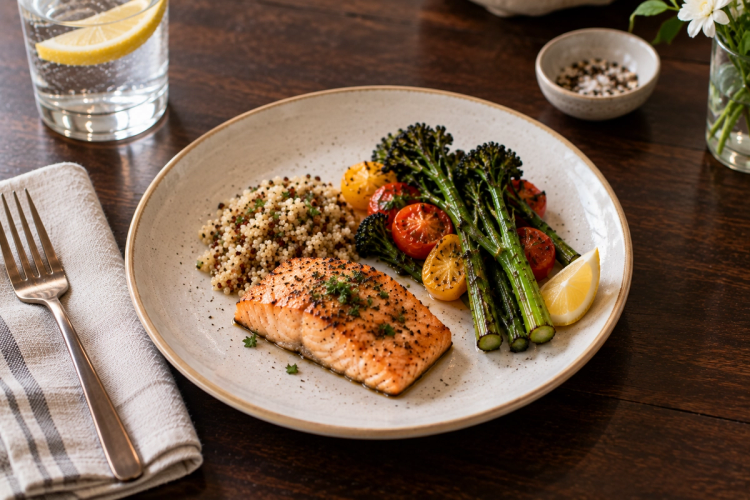
A GLP-1-friendly meal isn't a special category of food. It's a normal meal built with a few things front of mind: protein first, fiber built in, and portions sized for a stomach that empties slower than it used to.
The takeaway
The goal isn't to eat "diet food." It's to make every smaller bite count for more: protein and fiber first, then everything else.
The Three Things Every Plate Needs
Building a GLP-1-friendly plate
- Protein first, more than you'd guess
- Clinical guidance for people on GLP-1 medications generally points to 1.2 to 1.6 grams of protein per kilogram of body weight per day, higher than the standard recommendation, since a smaller overall intake still needs to cover muscle maintenance.
- Fiber, every time
Mayo Clinic; joint clinical advisory (ACLM, ASN, OMA, The Obesity Society)