Nutrition
Personal Chef for Seniors: What It Costs and When It Makes Sense
A personal chef for seniors can mean home-cooked, easy-to-eat meals without the shopping and cooking. Here is what it costs, who it helps, and what to ask first.
Key Takeaways
- A personal chef for seniors can mean home-cooked, easy-to-eat meals without the shopping and cooking
- Here is what it costs, who it helps, and what to ask first
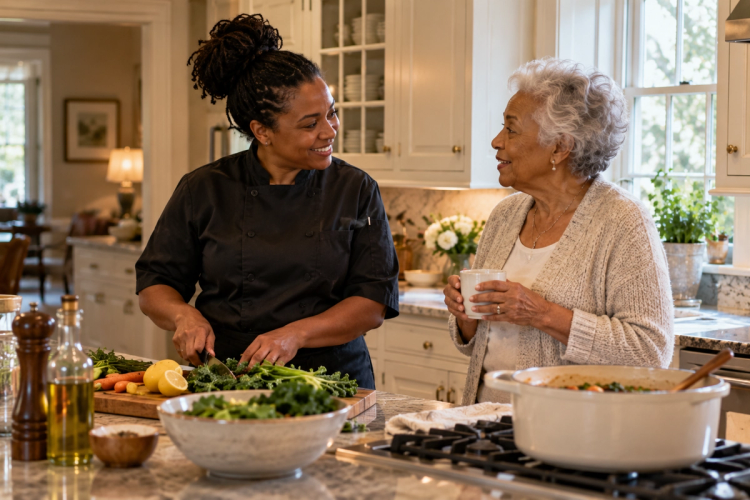
A personal chef for seniors is a simple idea. Someone shops, cooks, and leaves real meals in the fridge, so an older adult or their family does not have to. It can be the difference between eating a proper dinner and eating toast at 4 p.m. because standing at the stove feels like too much.
If you are helping a parent, a grandparent, or planning ahead for yourself, this guide covers when a personal chef makes sense, what to ask for, and what it costs.
Why Families Start Looking for a Chef
The reasons are usually practical. Grocery trips get harder. Cooking for one feels like a lot of work for a small payoff. Appetite can change, and so can chewing, taste, and energy. The National Institute on Aging notes that healthy eating after 60 can take more planning, because older adults often need the same nutrients with less food.
A chef solves the logistics. You pick the meals, they handle the shopping, cooking, and cleanup, and the food is ready to reheat.
Signs a chef may help
- Meals are getting skipped
- Dinner has turned into crackers, cereal, or nothing at all.
- The kitchen feels like a chore
- Standing, lifting pots, and cleaning up take more energy than they used to.
- There is a diet to follow
- A doctor has suggested less sodium, more protein, or another change, and the plan is hard to keep up with.
- Family is far away
- Adult children want to know a real meal is in the fridge, without flying in every month.