Nutrition
Heart-Healthy Meal Delivery: What Actually Works
Most "heart-healthy" meal delivery boxes are lower in sodium than takeout, not lower than what your doctor actually wants. Here's what the label means, where delivery falls short, and how a personal chef closes the gap.
Key Takeaways
- Most "heart-healthy" meal delivery boxes are lower in sodium than takeout, not lower than what your doctor actually wants
- Here's what the label means, where delivery falls short, and how a personal chef closes the gap
"Heart-healthy meal delivery" is one of the most searched phrases on our own site, and most of what shows up for it doesn't hold up under a real cardiac diet. A box labeled "heart-healthy" can still run 700 milligrams of sodium or more in a single entree. That's close to half a day's ideal limit under American Heart Association guidance, in one meal.
If your doctor handed you a heart-healthy eating plan after a diagnosis, a stent, a concerning cholesterol panel, or just a family history you're trying to get ahead of, you already know the real list is longer than "low fat." It's sodium, saturated fat, fiber, and the actual fish-to-red-meat ratio on your plate every week. National delivery services built for a mass market can't hit all four consistently, week after week, for one specific person. A chef cooking in your kitchen can.
What "heart-healthy" actually means
The American Heart Association's core guidance for heart-healthy eating isn't complicated on paper: build meals around vegetables, fruit, and whole grains; include fatty fish like salmon or mackerel at least twice a week for the omega-3s; and cap sodium around 1,500 to 2,300 milligrams a day, depending on your individual risk factors.
The problem is rarely the ingredient list. It's portion, prep, and consistency. Restaurant-style cooking, and a lot of packaged "healthy" meals, lean on salt to carry flavor because salt is cheap and shelf-stable. Home cooking built around fresh herbs, citrus, and slow-developed flavor can hit the same craving without the sodium load, but it takes someone actually cooking that way for you, meal after meal, not just once when you're feeling motivated.
Tip
If your doctor gave you a specific sodium target, often 1,500mg a day after a diagnosis, that number should drive every meal, not just the ones you cook yourself.
Where meal delivery boxes fall short
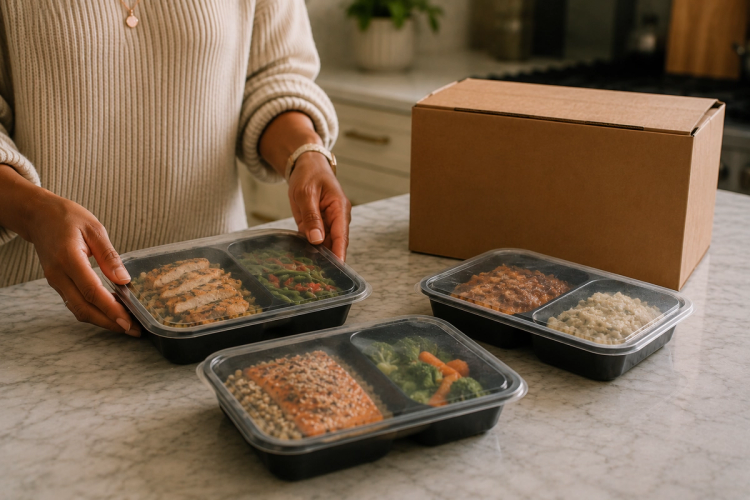
Most meal delivery and meal kit companies optimize for shelf life and shipping costs, not your lab results. Sauces and marinades are often the single biggest sodium source in a "heart-healthy" labeled kit, because a shelf-stable sauce needs salt as a preservative to survive days in transit. Portion sizes are also fixed at the company level. If your cardiologist wants you eating fish four times a week and red meat once, a rotating national menu built for a general audience can't personalize that, no matter how the box is labeled.
A personal chef cooking in your home works from your actual numbers: your sodium ceiling, your cholesterol targets, whether you're following a DASH diet after a diagnosis or just staying ahead of a family history. The chef buys fish fresh instead of shipping it, builds flavor with herbs and acid instead of salt, and adjusts the following week as your labs change.