Nutrition
Nourishing Fertility: What I Wish I Knew Before My Own IVF Journey
A physician who went through IVF herself on what the research actually shows about eating for fertility, and why capacity, not knowledge, is the real barrier.
Integrative Medicine Physician
Key Takeaways
- A physician who went through IVF herself on what the research actually shows about eating for fertility, and why capacity, not knowledge, is the real barrier
For years, I sat across from patients in my exam room and talked about food as medicine. How the right choices at the table can steady blood sugar, calm inflammation, and support the body's most complex processes. What I didn't share, at least not publicly, was that I was living that advice from the other side of the table too.
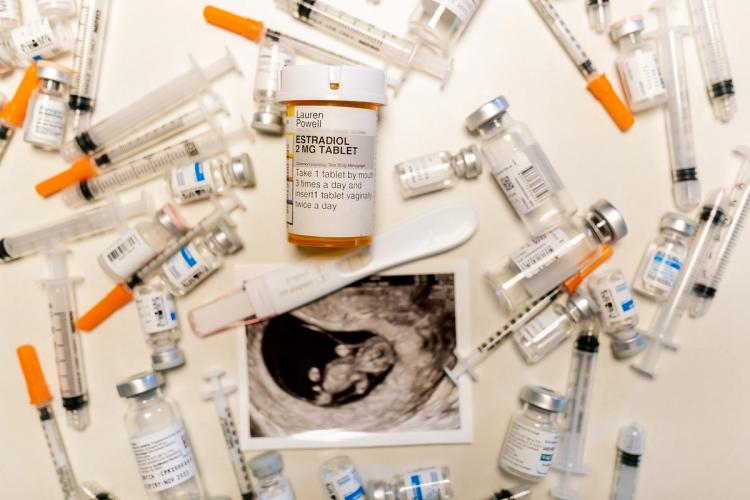
My husband and I struggled with infertility for several years. I know what it's like to track a cycle with the precision of a lab study and still feel like your body isn't listening. I know the particular exhaustion of doing everything "right" and still waiting. I was fortunate to have access to IVF, and after two embryo transfers, we built our family. That experience changed how I counsel patients on fertility nutrition, because I've lived the version where food felt like one of the only levers I had any control over.
That's what I want to talk about here. Not a miracle diet, not a promise, but what the research actually shows about eating for fertility, and how to make it sustainable when you're already stretched thin by appointments, injections, and uncertainty.
Food Isn't a Guarantee, But It's a Lever You Control
Fertility treatment can feel like a process happening to you. Bloodwork, monitoring, medication timing. Most of it is out of your hands. Nutrition is different. It's one of the few daily choices that's entirely yours, and the evidence suggests it's worth paying attention to.
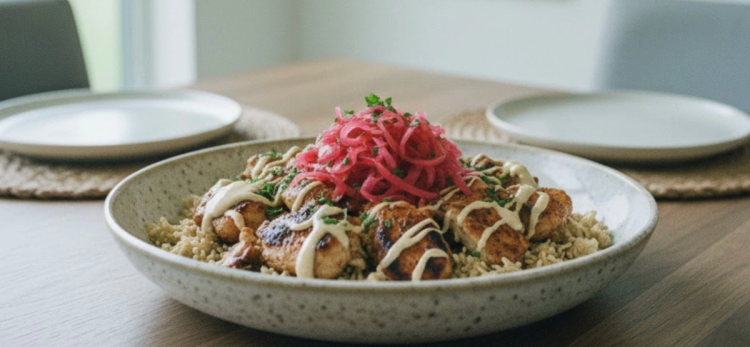
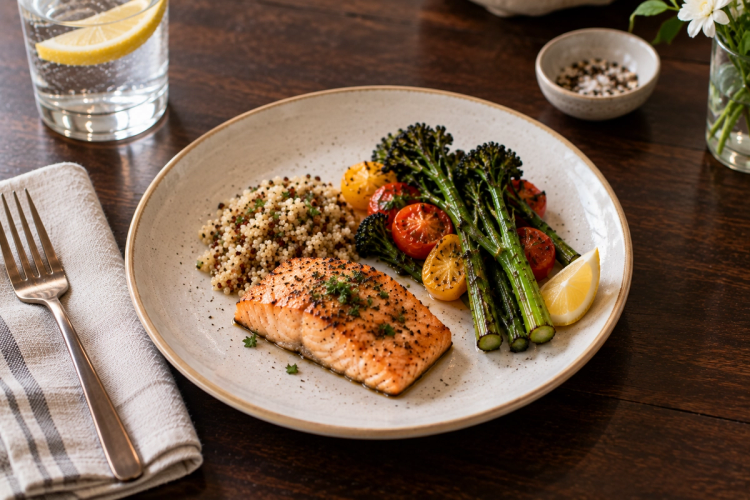
A growing body of research has looked specifically at dietary patterns and IVF outcomes, and the pattern that shows up again and again is the Mediterranean diet. A prospective cohort study of women undergoing IVF found that women with higher adherence to a Mediterranean-style diet had better fertility outcomes than those with lower adherence, in a study that specifically followed non-obese women ages 22 to 41 undergoing their first IVF treatment. Another cohort study found that women with higher Mediterranean diet adherence retrieved a significantly greater number of embryos than women with lower adherence. A more recent review of the literature notes that the odds of a successful IVF outcome rose with each incremental increase in Mediterranean diet adherence score, with the effect appearing most pronounced in younger women.
To be clear, this isn't a cause-and-effect guarantee, and the research base is still evolving. A recent systematic review acknowledged that current evidence remains insufficient to definitively support high Mediterranean diet adherence as a driver of fertility markers, and more rigorous studies are still needed. But when a dietary pattern shows up consistently across multiple cohort studies as associated with better outcomes, and it also happens to be one of the most well-studied, heart-healthy, anti-inflammatory ways of eating we know of, it earns a place in the conversation. It costs you nothing to eat this way, and the downside risk is essentially zero.