Nutrition
Fertility Nutrition: What to Eat Before and During IVF (According to the Research)
When you're doing everything you can to optimize your IVF cycle, food is one lever you actually control. Here's what the research says and how Livin makes the eating part easy.
Staff Writer
Key Takeaways
- When you're doing everything you can to optimize your IVF cycle, food is one lever you actually control
- Here's what the research says and how Livin makes the eating part easy
You're doing everything right. The injections, the monitoring, the appointments, the waiting. You're tracking every variable you can track and trying not to obsess over the ones you can't control.
Here's one you actually can: what you eat.
Not in a way that adds pressure. In a way that gives you something back.
What the Research Actually Says
The evidence on diet and fertility outcomes has grown significantly in recent years and it points consistently in one direction. A landmark 2022 evidence review published in Nutrients found that adherence to anti-inflammatory dietary patterns, particularly the Mediterranean diet, improves fertility outcomes, assisted reproductive technology (ART) success, and sperm quality in men.
Among women, the research found that following an anti-inflammatory diet was associated with more regular menstrual cycles, higher embryo quality, higher likelihood of live birth, and lower risk of conditions like endometriosis and PCOS that reduce the chances of conception. A 2024 literature review published in Nutrients confirmed that the Mediterranean diet's anti-inflammatory properties may improve conditions for implantation.
For men, higher adherence to a diet rich in whole grains, fruits, vegetables, legumes, nuts, and fish was associated with higher sperm count and better sperm motility.
The mechanism, researchers believe, centers on inflammation. Dietary patterns that reduce systemic inflammation appear to support follicular development, embryo quality, and the uterine environment for implantation.
This isn't a miracle. It's biology. And it's worth paying attention to.
What Anti-Inflammatory Eating Actually Looks Like on a Tuesday
It sounds clinical. It doesn't have to be.
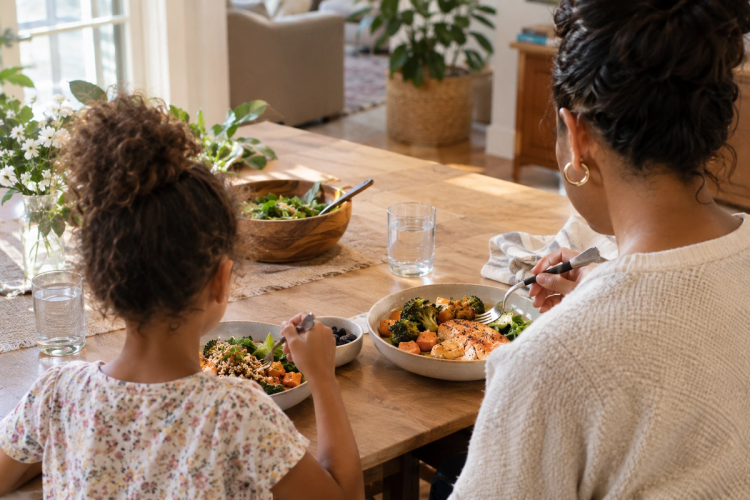
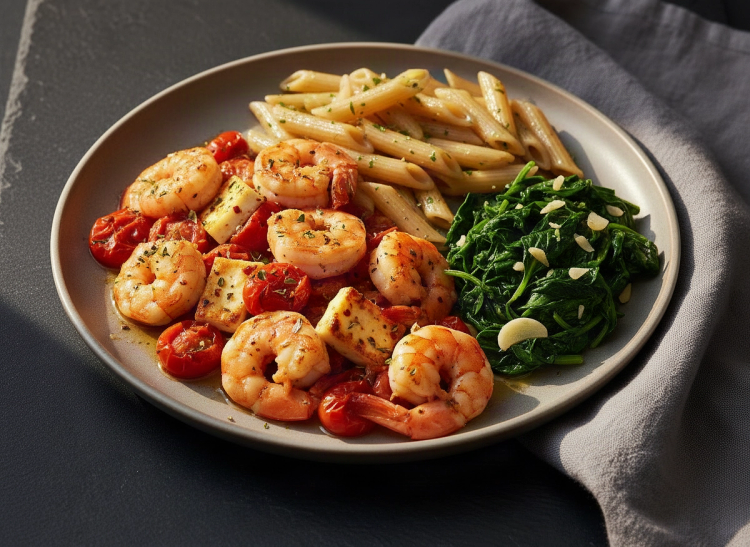
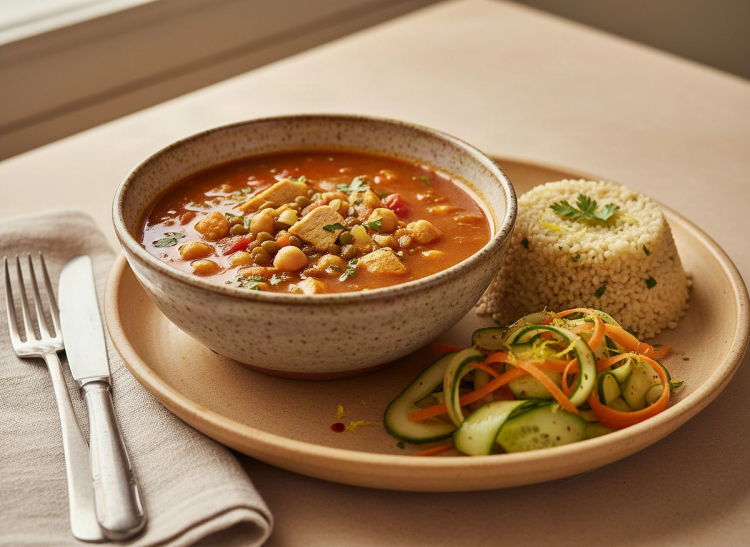
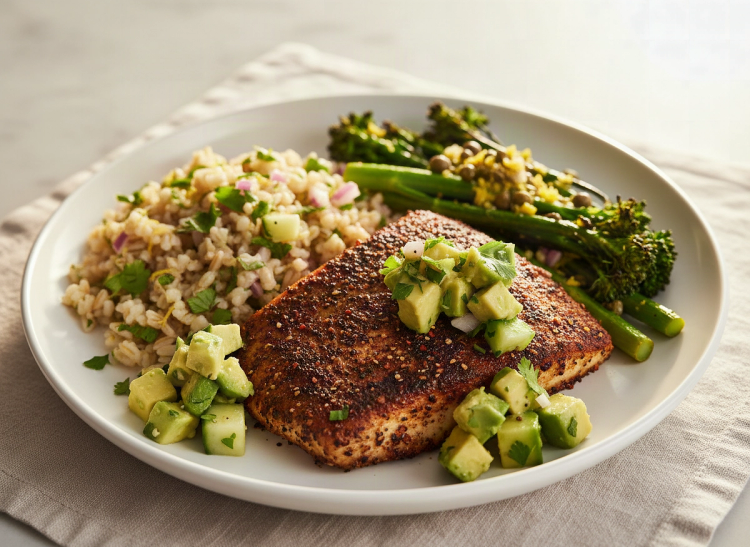
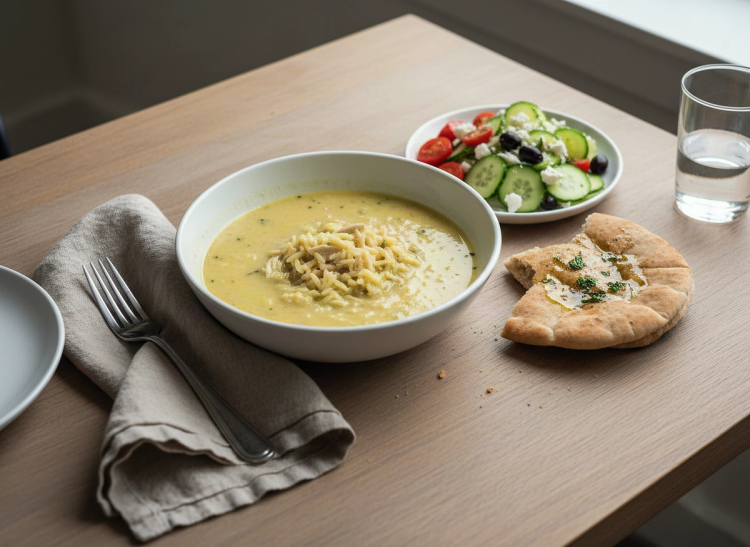
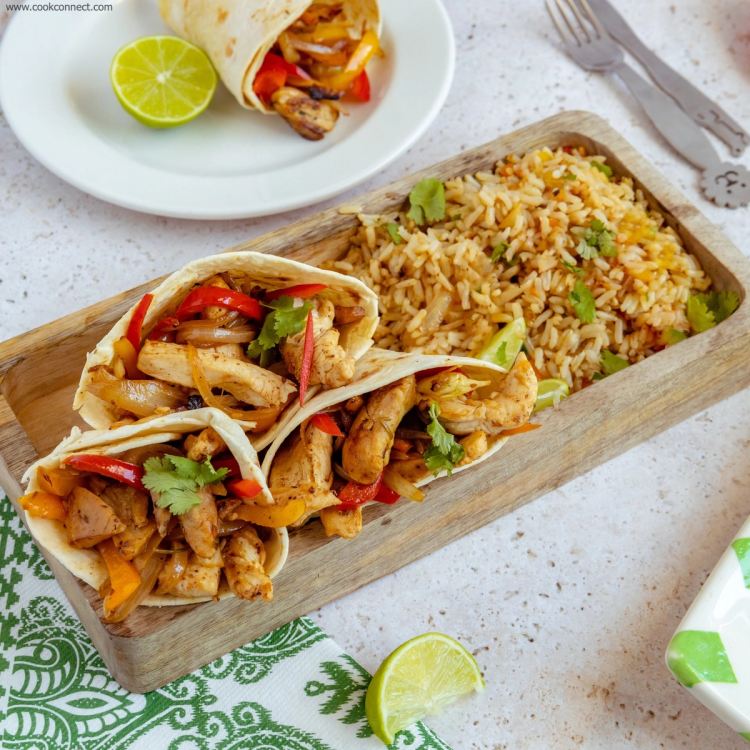
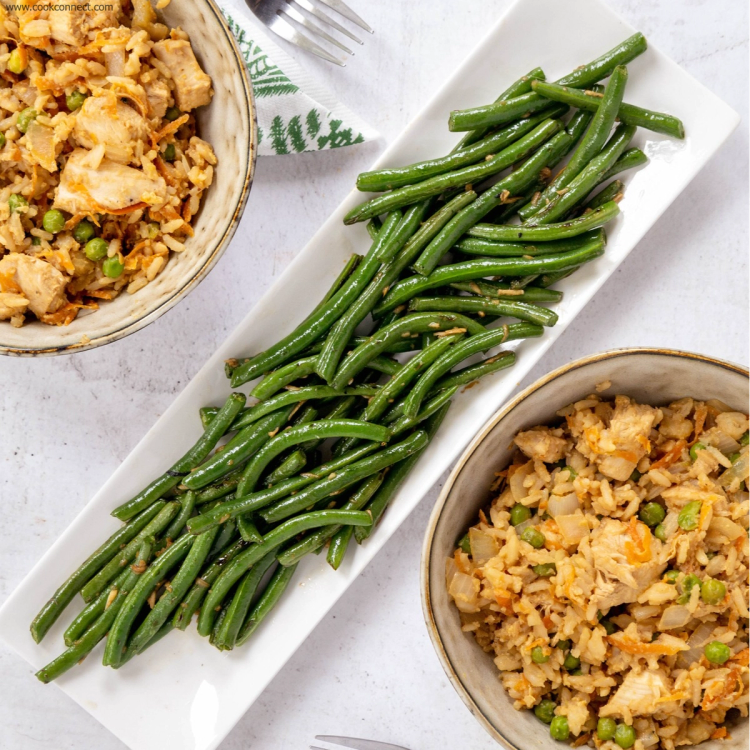
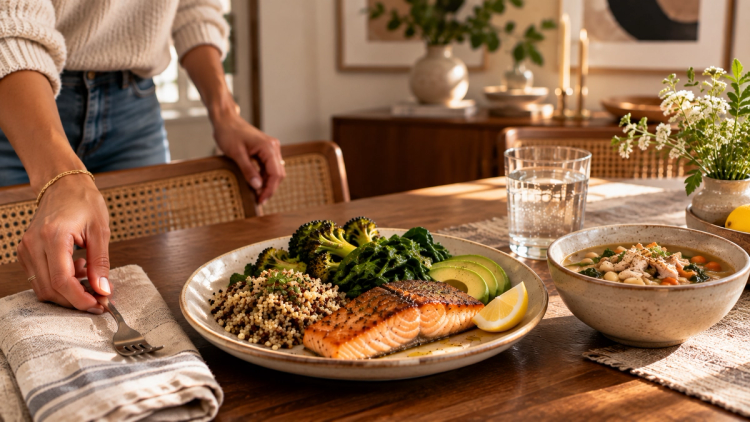
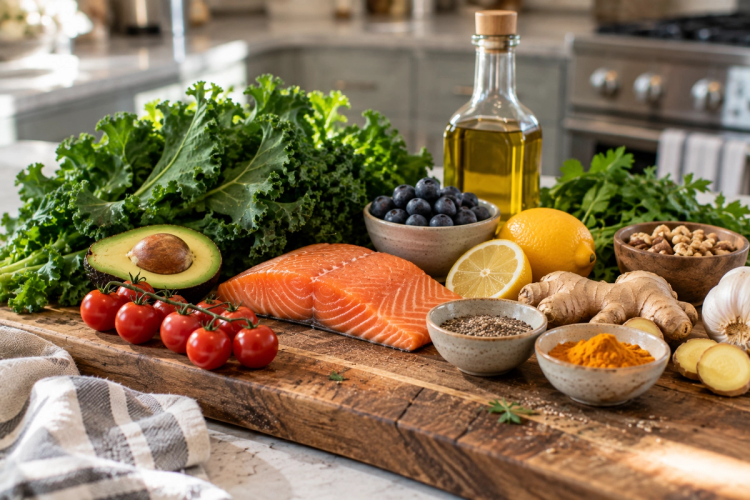
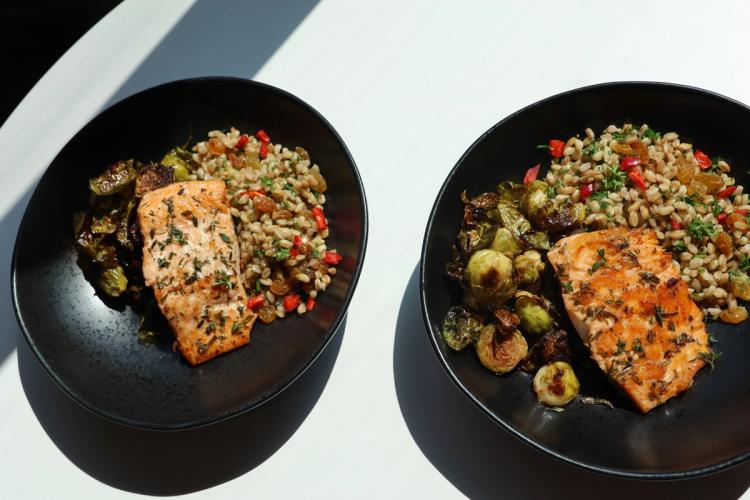
An anti-inflammatory preconception plate looks like this: wild salmon with roasted vegetables and olive oil. A chickpea and leafy green salad with lemon and good cheese. Slow-cooked chicken with root vegetables and a side of whole grains. Foods that are flavorful, satisfying, and built around real ingredients.
It's the opposite of a supplement protocol. It's dinner.
What it's not: highly processed foods, added sugars, and the inflammatory markers that come from regularly eating them. Research specifically flags these as disruptive to the hormonal balance and uterine environment you're working to optimize.