Why a Personal Chef Is Healthier Than Takeout And Smarter Than Doing It All Yourself

There’s a particular kind of exhaustion that shows up around 5:42pm. It lives somewhere between hunger and decision fatigue. Between Slack notifications and soccer practice pickup. Between “we should eat something healthy” and “just order it.”

In homes across Atlanta and Los Angeles, dinner has become a daily negotiation. Not because families don’t care about health, but because they care about everything.

Work. Kids. Aging parents. Fitness. Friendships. Growth.

Food sits in the middle of it all, quietly determining energy, mood, sleep, and long-term health while somehow still being treated like an afterthought.

The conversation usually swings between two poles:

  • Takeout is convenient but not ideal.

  • Cooking at home is healthier but exhausting.

There’s a third option. And it doesn’t require extremism, diet culture, or performative wellness. It requires structure.

That’s where Livin enters not as luxury theater, but as infrastructure. A personal chef, embedded in your actual life, quietly improving it. And yes, it’s healthier than takeout and it’s also, surprisingly, easier than doing it all yourself.

The Takeout Era Is Showing Its Cracks

For years, food delivery felt like modern genius. A few taps on Uber Eats or DoorDash and dinner arrived at your doorstep.

In cities like Los Angeles where traffic can swallow an hour without apology or Atlanta, where dual-income households run on compressed schedules, delivery became the bridge between ambition and appetite.

But 2026 feels different. Families are noticing patterns:

  • The “healthy bowl” that leaves them bloated.

  • The kids who eat fries but ignore the rest.

  • The sodium headache the next morning.

  • The creeping monthly total that rivals a car payment.

Restaurant food is engineered for impact. It needs to taste bold after transport. It needs to hold up under heat lamps. It needs to be consistent across hundreds of orders. It is not engineered for your blood sugar. Or your child’s sensitivity to dairy. Or your goal of feeling clear-headed at 7am.

Even when you order well, you’re still outsourcing ingredient choices, oil quality, portion calibration, and preparation standards. It’s not that takeout is “bad.” It’s that it’s indifferent. A personal chef is the opposite of indifferent.

When “Cooking at Home” Becomes Survival

So the solution must be cooking, right? In theory, yes. In reality, home cooking in busy households often looks like triage: Rotisserie chicken. Pasta with jarred sauce. Eggs. Frozen dumplings. Something quick. Something filling. Something that quiets hunger without creating more work.

There’s nothing morally wrong with this. But nutritionally, it’s rarely optimized. Most families rotate the same five to seven meals. Vegetables are present but uninspired. Protein is inconsistent. Sauces lean sugary or processed. Portions skew toward what’s easiest, not what’s balanced. And underlying it all: stress.

Stress changes how we cook. It speeds us up. It narrows creativity. It pushes us toward shortcuts. You can technically cook at home and still live in reactive mode. That’s not a failure. It’s a bandwidth issue.

A personal chef doesn’t just replace the act of cooking. They replace the cognitive load around it.

What Professional Skill Actually Changes

When a trained chef walks into your kitchen, something subtle shifts. They’re not Googling substitutions mid-recipe. They’re not eyeballing salt nervously. They’re not improvising under pressure.

They understand:

  • How to build flavor without over-salting.

  • How to use fats intentionally.

  • How to make vegetables taste like something.

  • How to balance protein, fiber, and carbs for sustained energy.

  • How to cook once and create thoughtful leftovers.

And when that chef is matched through Livin, the work becomes deeply personal.

They shop specifically for your family.

They cook in your kitchen.

They clean before they leave.

They adapt over time.

This isn’t batch-cooked food shipped from a warehouse. It’s food designed around your household’s rhythms. The difference between “home-cooked” and “chef-prepared at home” is skill density. Skill compounds.

The Mental Health Component No One Quantifies

Food management is invisible labor. In many high-performing households particularly those led by ambitious women the mental orchestration of food remains constant:

What’s in the fridge? What needs to be used? What are we making Thursday? Who’s picking up groceries? Did we order enough?

Even when takeout is chosen, someone carries the cognitive weight. A personal chef collapses the entire decision tree. The relief is not dramatic. It’s a soft exhale.

Dinner exists. It’s handled. It’s balanced. it’s waiting.

And that calm, repeated weekly, lowers household friction. Lower friction means more patience. More patience means better family dynamics. Better dynamics influence everything from sleep to stress hormones. Health is relational.

Children Notice the Difference

Children absorb food culture through repetition. When dinner is chaotic, rushed, or screen-dominated, food becomes transactional.

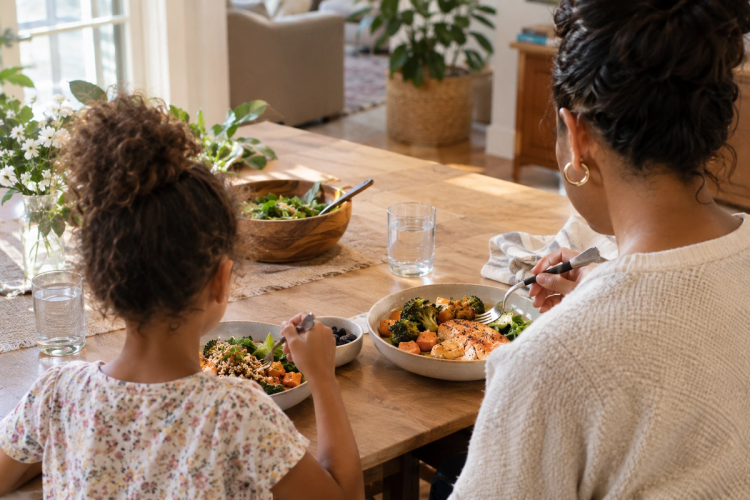
When dinner is prepared thoughtfully, plated intentionally, and served without stress, something changes. Kids try more when adults aren’t negotiating in exhaustion. They expand palettes when vegetables are prepared with care rather than obligation. They learn that food is part of life not a nightly scramble.

In cities like Los Angeles, where wellness culture is omnipresent, and Atlanta, where family traditions run deep, the opportunity is the same: normalize balance early. A personal chef quietly supports that normalization.

It’s Not About Being Fancy

There’s a lingering perception that hiring a chef signals excess. But in 2026, in both Atlanta and Los Angeles, the more interesting families aren’t signaling wealth. They’re optimizing time. They outsource what drains them so they can invest where it matters.

We already accept outsourcing:

Cleaning. Accounting. Childcare. Grocery delivery.

Why does food, the thing consumed multiple times daily, remain the sacred chaos? When structured correctly, a personal chef isn’t indulgence. It’s operational design.

Supporting a Better Food Economy

There’s another layer beneath the surface. When households rely heavily on delivery apps, a significant portion of that spending flows to platforms like Uber Eats not necessarily to the chefs or line cooks who prepared the meal.

With Livin, money moves differently.

It supports:

  • Local culinary professionals.

  • Flexible, sustainable chef careers.

  • Community-based work.

In cities with vibrant food cultures like Atlanta and Los Angeles, that matters. You’re not just buying dinner. You’re participating in a more human food system.

The Quiet Upgrade

The benefits of a personal chef don’t show up in dramatic social media posts. They show up in smaller ways:

A refrigerator that feels calm instead of chaotic.

A week that doesn’t unravel at dinnertime.

A body that feels steady rather than spiking and crashing.

Children who eat more colors without coercion.

Partners who aren’t negotiating cleanup at 9pm.

You won’t necessarily say, “This changed everything.” You’ll say, “This feels easier.” And ease, sustained over years, transforms health more effectively than any 30-day plan.

Livin Is Better. Full Stop.

Not because it’s exclusive. Not because it’s trendy.

But because professional skill, applied consistently inside your own kitchen, produces better outcomes than:

  • Restaurant food engineered for scale.

  • Rushed home cooking driven by exhaustion.

  • Subscription boxes that still leave you chopping at 7:30pm.

Livin was built to make what was once reserved for the 1% accessible to real families living real lives. Health isn’t about intensity. It’s about systems. And when your food system works for you rather than against you, everything else feels lighter.

Next
Next

 Food As Medicine